Project News

Image
“Innovative Business Ideas Generation - 2026” at NPUA

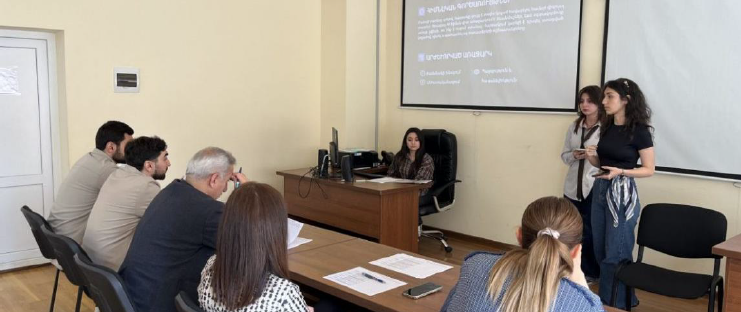
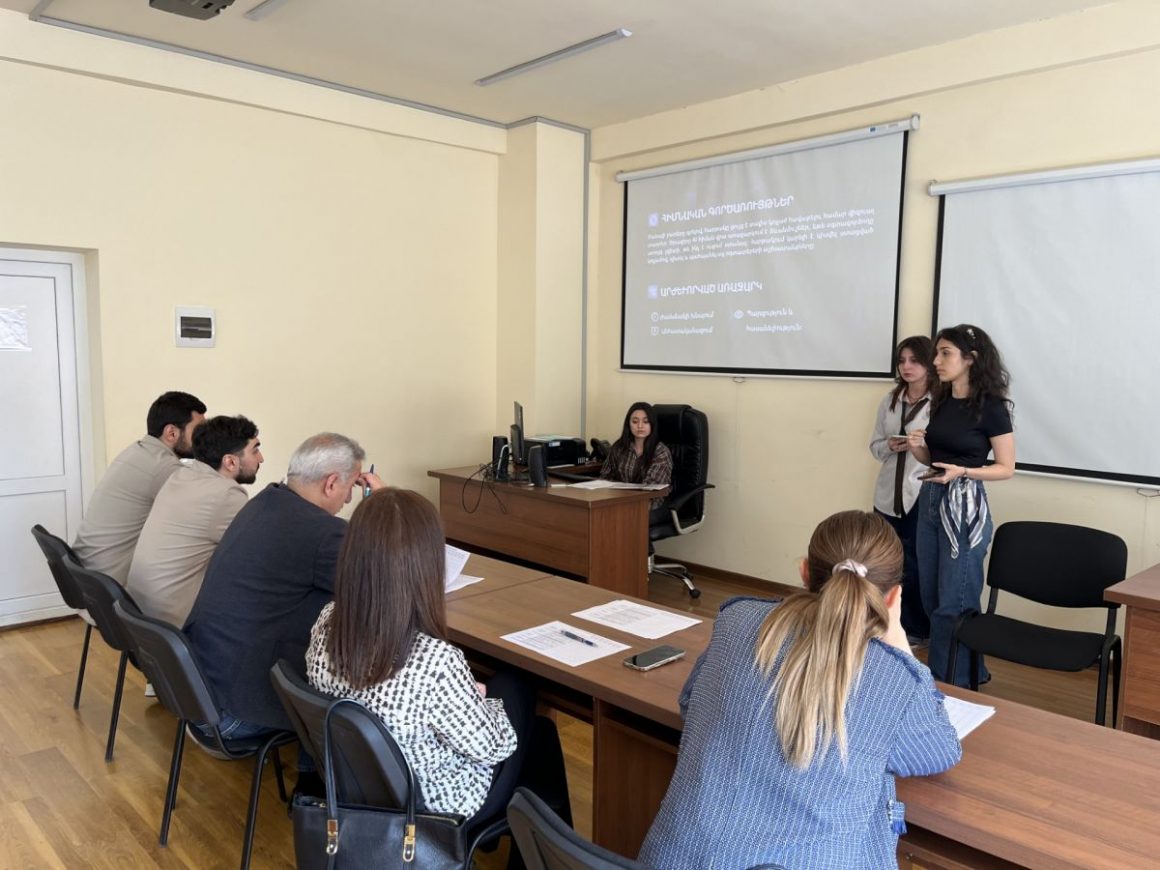
Within the frames of Erasmus+ LISS24 (Learn-Innovate-Sell-Succeed) project “Innovative Business Ideas Generation” courses, ended by internal competitions student competition, were organized in the National Polytechnic University of Armenia (NPUA). Course classes with full participation of 23 NPUA students started on March 30, 2026, and ended on April 10. Based on the experience of the previous year, the 2026 training classes phase was organized within a shorter period and in a more intensive format compared to the previous year. The main training phase was conducted over a two-week period, in the format of three meetings per week, with each meeting lasting 1.5 to 2 hours. Within the classes, the participants were involved in thematic lectures, lively discussions, group work and practical assignments. The course was focused on three key areas: creative thinking, comprehensive business impact assessment and business modelling. These components provided the theoretical base for generating competitive, market-oriented business ideas. The practical learning process included the application of ideas-generation and innovation modern tools, including brainstorming, design thinking, mind mapping, market research and customer needs analysis, business model development, pitch preparation and presentation practice. Students also had the opportunity to meet business professionals and learn from practical experience related to the commercialization of ideas. Interactive and game-based learning methods were used to make the sessions more practice-oriented and to help participants critically test the strengths and limitations of their ideas. The emphasis was placed on the understanding that an innovative idea is valuable only when it addresses a real problem, creates value for a specific target group and can find its place in the market. The course concluding inter-university “Innovative Business Ideas Generation” competition was held on April 17, at NPUA, served as the final practical stage of the training course, during which students presented the innovative business ideas developed throughout the training process. A total of 5 student teams, composed of 12 students, participated in the competition. The evaluation of presented innovative idea-projects was carried out by the Evaluation Committee composed of the representatives from the Armenian business sector and Project partner universities. The submitted ideas were assessed according to the preliminary developed and spread among participants evaluation criteria, including innovation originality, market analysis and feasibility, quality of business model development and its presentation, communication and team interaction skills, as well as the ability to deliver a convincing presentation. As a result of Competition, the following student teams were nominated as the winners: ✓“Perseus” team was awarded 1st place – an electronic device intended for programmers and engineers to test development, and verification of various ideas. ✓“Air Purification Station” team, 2nd place - an air purification station operating on the principle of ionization and providing significantly lower construction and operating costs, ✓“Collage” team, 3rd place - a platform that, through an AI toolkit, helps students in their ideas’ design, advertising, and marketing making the ideas more attractive. All three team members, as well as the other competition and training participants receieved certificates of winners and participants correspondingly. Also, as it was annonced preliminary, the first 2 winner teams gained the right and represent NPUA in the similar Eastern Partnership Games held in Tbilisi on May 19, 2026, again within the frames of LISS24 project. This successful pioting on international stage should be considered as a quite tangible result of LISS24 in a whole and of this two-year campaign of trainings and internal competitions aimed at the further promoting innovation, entrepreneurship, and international cooperation of students, in particular.

Image
“B2B Sales” Training and Competition 2026 at NPUA

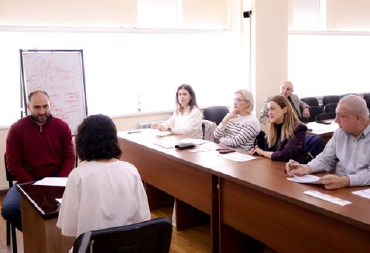
A two-week “B2B Sales” intensive training started at NPUA on February 23, 2026 and ended on March 6, 2026. The classroom sessions were followed by a phase aimed at assessing the participants’ preparedness and addressing the identified gaps. During this phase, the training participants also met with NPUA students who, in January 2026, had participated in the first European online EOBN Sales Competition who shared the gained experience with the training participants and gave them some practical reccomendations. To provide information support for the recruitment of training participants a broad preliminary information campaign among NPUA students was carried out. Relevent emails were sent to the university email addresses of all NPUA students, and a relevant announcement was posted on the official website and social media platforms of the university. Information was also shared through the communication channels of the Student Council and direct information meetings were held with student groups. To conclude the campaign, on February 18, 2026, a final information meeting was held for more than 60 students who were presented with the training schedule, content, and other relevant details and additional clarifications. During the training sessions, active and interactive teaching methods were applied, including group discussions, teamwork, case studies, role-playing exercises, sales simulations, and practical assignments. All these helped students develop knowledge and practical skills in customer profiling, negotiation, objection handling, and sales presentation. Following this phase, the students were given one week to improve their sales skills and to work on real sales cases. During this period, the students met with experts on a daily basis and received individual practical consultations and reccomendations on the subject.The main purpose of such methodical approach to the “B2B Sales” training was to equip students with real life knowledge, skills, and tools necessary for effective B2B communication, customer needs identification, sales presentation and negotiation. The course was designed to combine theoretical knowledge with practical exercises, enabling students to apply sales techniques in realistic business scenarios. The course concluding “B2B Sales” competition was organized in two separate sessions on March 12 and 13, with the actual participation of 9 competitor students in total, selected from 19 full class participants. Fully identical scenario for both competition sessions was developed and provided for all 19 potential participants preliminary. Before the competition, the participating students met twice with representatives of the marketing service and engineering team of “RPE Controls” and became acquainted with the services, products, and comprehensive solutions offered by the enterprise. Evaluation criteria were developed and presented, prelminary as well, to the Judge Jury composed of five representatives of business and partner universiteis. As a result of two-day competition, the following students were nominated as the winners and received appropriate Winner Certificates: ✓Anna Vardanyan was awarded 1st place, ✓Anna Aleksanyan - 2nd place, and ✓Vahe Simonyan - 3rd place, while all other students who took part in the «B2B Sales» competition and/or trainings also receieved corresponding certificates of participant. As it was annonced preliminary, all three winners of the held NPUA internal competition gained also the right to represent the University in the «B2B Sales» international competition (Eastern Partnership Games) to be held in Armenia within the frames of LISS24 project by end June.

Image
Innovation Trainings and Competition at NUACA

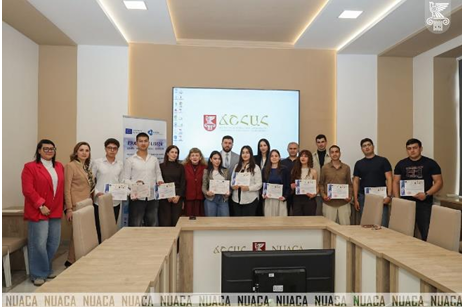
From 25 February to 16 March 2026, within the framework of WP4 of the Erasmus+ LISS24 project (T4.3 Organizing Innovation Courses and Competitions), a series of lectures on the topic “Generation of Innovative Ideas” was launched at the National University of Architecture and Construction of Armenia. It was run until March 16 of 2026 and ended with the competition held at the NUACA in two rounds (respectively on March 25 and March 27 of 2026). The purpose of this course was not only to impart basic knowledge about innovative business ideas to students, but also to develop students' creative thinking, allowing them to identify consumer problems and generate ideas aimed at solving these problems. An interactive teaching method was used for training implementation. The training materials were developed, including didactic materials intended for interactive learning. Didactic materials included the following: printed materials, various information materials (PowerPoint presentations), photos, pictures, game and interactive materials, roleplaying games, digital and practical materials. The lectures were conducted with the participation of the NUACA local person who is responsible for the quality assurance of all events implemented within the LISS24 project. This report is a confirmation that the training course was conducted qualitatively and in accordance with the set objectives. The training on the course "Innovative Business Ideas Generation" was completed by two phases of the competition: respectively on March 25 and March 27, for business ideas developed by the course participants. Six teams of students participated in the final round of competition, each of which presented its business idea using the CANVAS business model. The presented business ideas were evaluated by the eight-member committee according to pre-developed criteria. As a result, 3 participants were recognized as winners in the first, second and third places. All participants were awarded by the certificates of participation.

Image
B2B Trainings and Competitions at NUACA

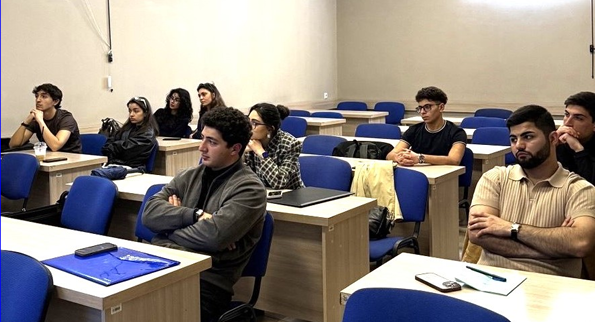
From April 10, 2026, within the framework of WP4 of the Erasmus+ LISS24 project (T4.3 Organizing Innovation Courses and Competitions), a series of lectures on the topic “Business to Business (B2B) sales” was launched at the National University of Architecture and Construction of Armenia. It was run until April 24 of 2026 and ended with two rounds of competition (respectively on April 27 and April 29, 2026).The purpose of “B2B sales” training was to equip students with the knowledge, skills, and tools necessary to effectively utilize a company’s products or services, improve operational efficiency, and foster long-term strategic partnerships that drive mutual growth and success. The training materials were developed, including didactic materials intended for interactive learning. Didactic materials included the following: printed materials, various information materials (PowerPoint presentations), photos, pictures, game and interactive materials, role-playing games, digital and practical materials. The lectures were conducted with the participation of the NUACA local person who is responsible for the quality assurance of all events implemented within the LISS24 project. This report is a confirmation that the “B2B Sales” training course was conducted qualitatively and in accordance with the set objectives. The training on the course "B2B Sales" was completed by two rounds of the competition (respectively on April 27 and 29). The course participants were prepared for the first round of the competition by Ms. Tatevik Yedoyan. The scenario in alignment with the topic of competition was developed for the first round of competition and potential participants were provided by the assignment preliminary. Eleven students took part in the final round of competition. The judges commission of the final round of competition was composed from 6 members. Evaluation criteria were presented to the judges. The competed students were provided with the assignment. Two employees of ReZident.am company took a role of “buyers”: • Anushik Grigoryan - Sales Manager of ReZident.am • Roza Adamyan - Sales Manager of ReZident.am As a result of the competition, the following students were nominated: Luisa Mkrtchyan for 1st place Armine Hakobyan for 2nd place Areg Grigoryan for 3rd place All students who took part in the” B2B Sales” training received certificates of participation.

Image
GTU to host Eastern Partnership Innovation Competition within the Erasmus+ program

Georgian Technical University will host a large-scale event — the “Eastern Partnership Innovation Competition” — within the framework of the Erasmus+ grant program KA2 institutional strengthening project “Learn – Innovate – Sell – Succeed” (LISS24). The goal of the project is to support the practical implementation of innovative ideas among students, develop entrepreneurial skills, and share international experience. The event will officially open on May 19 and will involve students, young innovators, and representatives of the academic sphere from both Georgia and Eastern Partnership countries — Finland, Sweden, Spain, and Austria. Within the competition, participants will have the opportunity to present their startup ideas, innovative products, and technological projects. According to the dean of the Faculty of Transport Systems and Mechanical Engineering at GTU, the event within the framework of LISS24 was planned several months ago. As Professor Boris Githolendia states, the project includes intensive mentoring and a series of educational trainings at partner universities in Georgia and Armenia. At the final stage of the competition, 12 selected teams from 6 universities will present their projects — including student teams from Georgian Technical University. According to the dean, the event is large-scale and will be attended by members of the project consortium together with Georgian and Armenian colleagues, while the winners will be selected by a specially created jury. The competition will be held in various categories, including digital technologies, social impact, creativity, and others. “It is of special importance for us that Georgian Technical University is hosting an international-scale innovation platform. The ‘Eastern Partnership Innovation Competition’ gives students the opportunity to turn their ideas into real projects, deepen their entrepreneurial and technological skills, and establish connections with international professional networks. Innovation in the field of transport systems and mechanical engineering is especially important, as the modern engineering sector is rapidly developing and requires new, practical, and sustainable solutions. Within the university space, the development of the entrepreneurial ecosystem is increasingly based on the systematic support of student ideas. The goal of the project is precisely to ensure that young people receive structured knowledge and academic as well as practical assistance already at the stage of shaping their ideas. The LISS24 project significantly improves the innovation ecosystem and creates important opportunities both for our students and at the institutional level.” – Associate Professor Boris Githolendia The LISS24 project aims to enhance innovative competencies in engineering education. At Georgian Technical University, the institutional coordination of the project is carried out by the University Office of Technologies and Grant Projects, while the initial piloting of the results is taking place at the Faculty of Transport Systems and Mechanical Engineering. The project’s partner is the GTU Department of Student Services, Culture, and Sports. Additional information about the project is available on the website. https://www.gtu.edu.ge/en/stu-shi-erasmus-programis-pharglebshi-aghmosavleth-partniorobis-qveqhnebis-inovatsiebis-konkursi-chatardeba/

Image
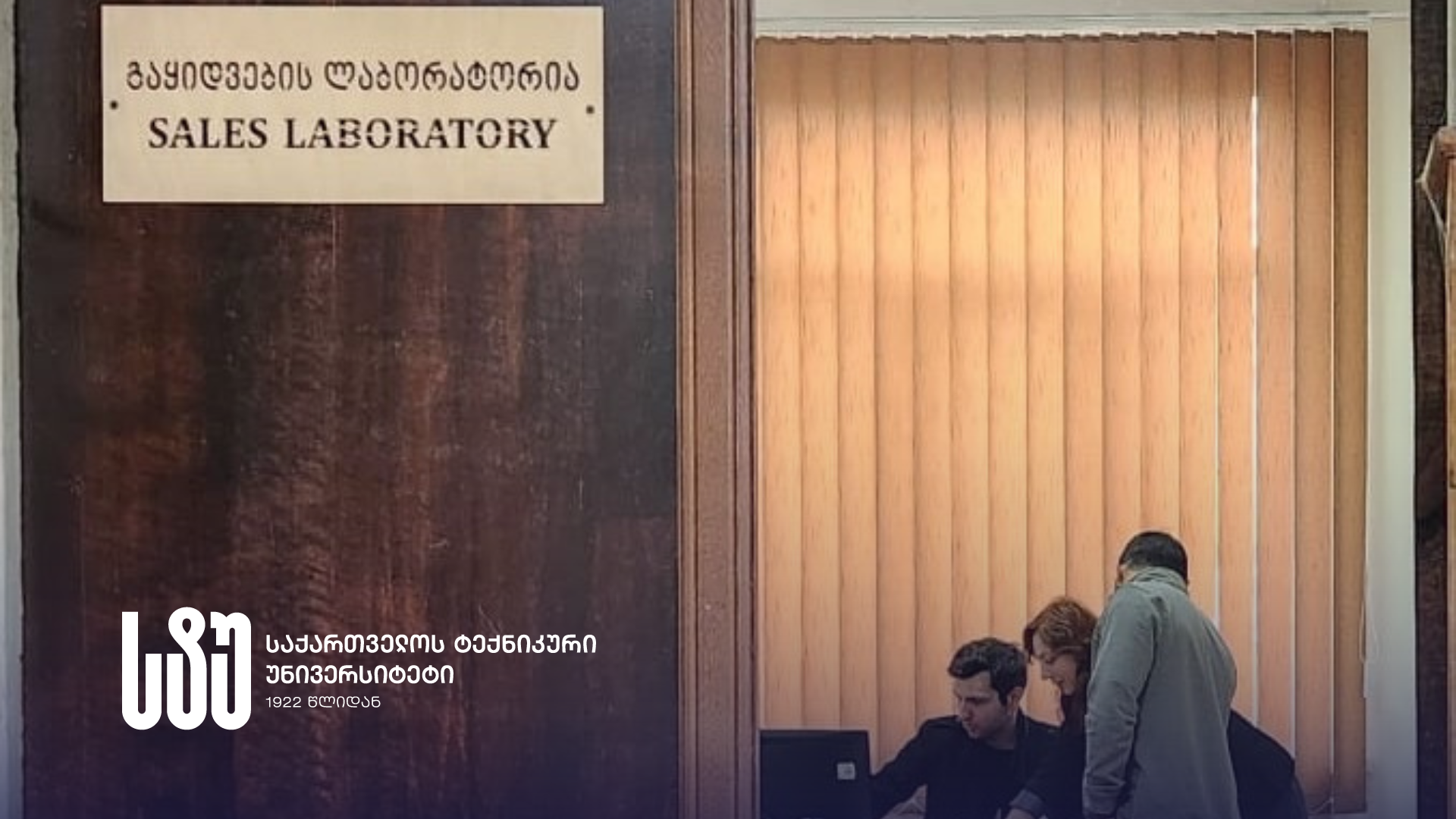
At the Georgian Technical University, within the framework of the international Erasmus+ project LISS24 (Learn – Innovate – Sell – Succeed), a “Sales Laboratory” has been established. This was reported by the university.

According to the university, by decision of the Academic and Representative Councils, the “Sales Laboratory” has been founded as a research unit and serves as a multifunctional educational and practical environment. It is designed to support the development of students’ professional skills in both B2B and B2C sales, as well as to facilitate joint research projects with the business sector. According to the Vice-Rector of Georgian Technical University, the functional scope of the laboratory includes the creation of a multifunctional educational and practical space integrating teaching, research, and practical activities. As stated by Professor Tamar Tsereteli, the model is based on modern educational paradigms that prioritize experiential learning and the active involvement of students in real business processes. “The aim of the project is to introduce modern sales standards, methods, and tools into the educational programs of Georgian Technical University. Through the laboratory, students are given the opportunity to develop skills relevant to the business environment, such as negotiation, strategic sales planning, and key account management. Currently, the university’s academic staff is developing relevant courses, which will soon be integrated into various academic programs. This initiative will contribute to fostering a sales culture among engineering students and enhancing their competitiveness,” noted Professor Tamar Tsereteli. According to the Dean of the Faculty of Transport Systems and Mechanical Engineering, within the framework of the project, modern technological equipment has been procured for the “Sales Laboratory,” and qualified personnel have been trained. As reported by Professor Boris Gitolendia, with the support of the university administration, the laboratory’s workspace has been fully renovated. “It is noteworthy that this is the first laboratory of its kind in Georgia, and it will significantly strengthen collaboration between the business sector and the university. The laboratory will offer various research services to the business sector aimed at enhancing their sales potential and competitiveness. The LISS24 project is an institutional development grant project implemented under the Erasmus+ KA2 program, aimed at improving innovative competencies in engineering education. At Georgian Technical University, the institutional coordination of the LISS24 project is carried out by the University Office of Technology and Grant Projects, while the initial piloting and main activities are implemented at the Faculty of Transport Systems and Mechanical Engineering,” noted Boris Gitolendia. The LISS24 (Learn – Innovate – Sell – Succeed) project, implemented under the European Union’s Erasmus+ KA2 program, is coordinated by the Turku University of Applied Sciences (Finland). The LISS24 project will conclude in December 2026. Additional information about the project can be found at: http://liss24-am.liss24.com/.

Image
The "Innovative Business Ideas" competition was held at the Polytechnic University within the framework of the Erasmus+ program.

The National Polytechnic University of Armenia successfully launched and held the “Innovative Business Ideas” competition, which was implemented within the framework of the Erasmus+ “Learn, Innovate, Sell, Succeed” (LISS24) program. The initiative brought together creative teams of students and pupils, whose goal was to present to the public business projects containing innovative solutions applicable in the modern market. The competition stage was preceded by specialized thematic courses, during which participants had the opportunity to train and deepen their knowledge in three key areas: creative thinking, comprehensive business impact assessment and business modeling. This preparatory stage was of fundamental importance for the participants, providing the theoretical and practical base necessary to generate competitive ideas. The courses were organized exclusively in an applied format, which allowed the participants to conduct a thorough market analysis and formulate their own ideas through group work. Particular attention was paid to assessing the feasibility of projects, bringing them into line with modern entrepreneurial requirements and market dynamics, which was the main result indicator of the competition. Gor Martirosyan, Director of the Center for Labor Market Research and Professional Career: “The main goal of this competition is to form the students’ abilities not only to generate ideas, but also to make them applicable in the market. We used training and game methods so that participants could develop practical thinking, be able to correctly assess the viability of their idea and effectively present it to investors or partners. It is important for them to understand that an idea has value only when it can solve a real problem and find its place in the market.” The first place went to the “Perseus” project, which involves the development of a new generation development board. It is a multifunctional electronic device designed for programmers and engineers to quickly test, develop and verify various ideas. The device includes a microcontroller, power supply system, connection ports and communication modules, which allows for a wide range of applications. The team members are David Lanjuni, a student of the M 510 academic group, and Lilit Afrikyan, a student of the IT 538 academic group. The second-place team presented the “Air Purification Station” project. It is based on the principle of ionization and is aimed at significantly reducing construction and operation costs, while ensuring high efficiency. According to preliminary calculations, the station is able to purify up to 30 thousand cubic meters of air per hour. The team includes Levon Soghomonyan, a student of the EE 334 academic group, Arayik Karapetyan, a student of the IT 361 group, and Mariam Ghambaryan, a student of the EE 306 group. In total, 5 teams participated in the competition, represented by 12 students from different institutes and faculties of the National University of Science and Technology. The winning teams will receive a unique opportunity to travel to Georgia to participate in an international competition jointly held with students from the program's partner universities. This platform will provide young innovators with the opportunity to present their ideas to a wide international professional audience.